


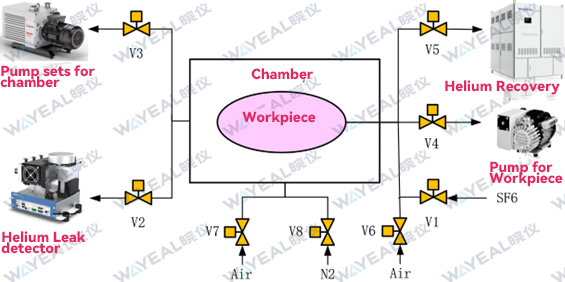
Vacuum Evacuation for Gross Leak Detection
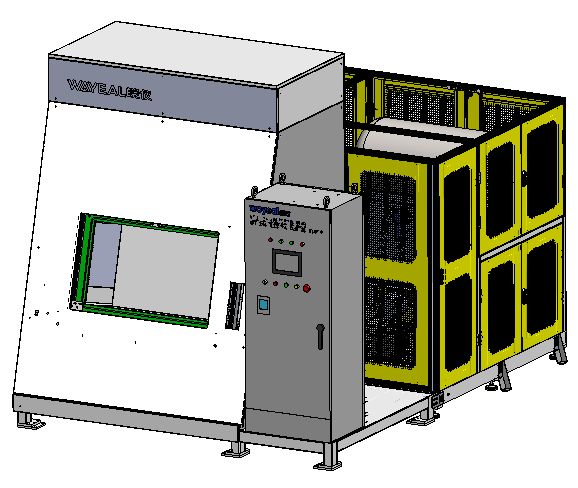
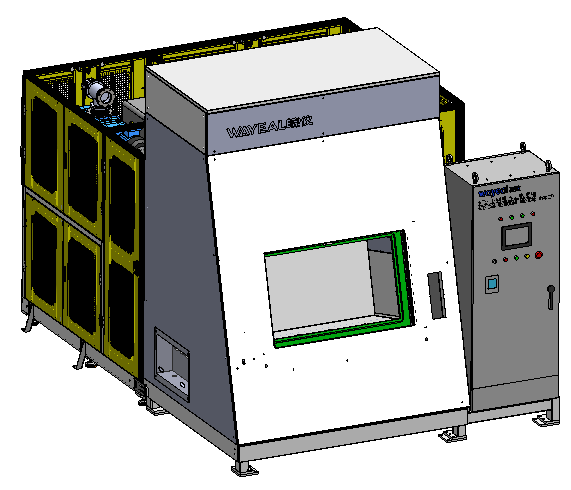
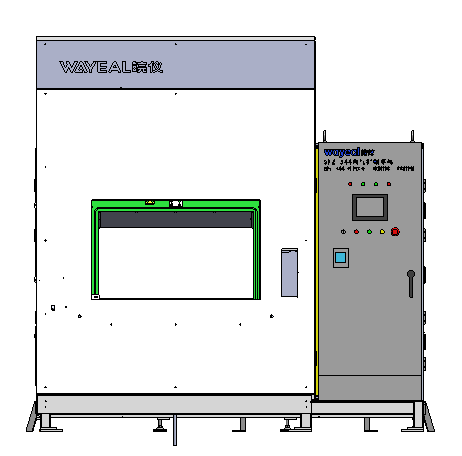
During leak detection, place the workpiece on the pallet, manually push the pallet and workpiece into the vacuum chamber, connect the workpiece to the system, and press the dual-start button. The chamber door closes automatically, and the remaining processes are completed by the system.
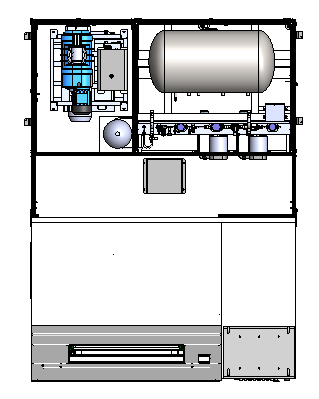
After the chamber door is securely closed, the system opens Valve V3 and closes the other valves to evacuate the vacuum chamber and workpiece simultaneously. It monitors the vacuum levels inside both the workpiece and the chamber, keeping the pressure difference between them within 0.05 MPa.
When the vacuum chamber reaches 100 Pa and the workpiece is evacuated to 30000 Pa, the system holds pressure for 30 seconds. The pressure and holding time are adjustable. It then measures the vacuum-level changes of both the workpiece and chamber.
If the vacuum-level change in the chamber does not exceed the set value, for example 100 Pa, the workpiece is treated as free of gross leaks and the system continues evacuation for medium and micro leak detection.
If the vacuum-level change exceeds the set value, the system identifies a gross leak, triggers audible and visual alarms, inflates the workpiece and chamber synchronously, and opens a selection interface for termination or manual leak location.
For manual location, the chamber door opens and the workpiece can be inflated with nitrogen at the specified pressure while maintaining the pressure-difference requirement. After manual inspection, the operator confirms deflation and the system ends the detection with a prompt.